
Protecting Men's "Power Factory": Understanding Testicular Physiology, Risks of Cryptorchidism, Testicular Torsion, and Various Scrotal Cysts
The Power Plant: The Testes. The male testes correspond to the female ovaries, performing a series of crucial tasks. They produce male hormones, including testosterone and sperm, within interstitial cells. From puberty onwards, sperm production continues at a constant rate. In the male scrotum, the testes hang loosely from a spermatic cord composed of blood vessels, nerves, and connective tissue. During fetal development, they are located in the abdominal cavity but later descend into the scrotum. This is a critical developmental step; as long as the testes remain in the abdominal cavity, the man is infertile. Unlike women, the male gonads are located externally because sperm production can only occur at a specific external temperature, approximately 2°C lower than normal body temperature. The oval-shaped testes consist of a several-hundred-meter-long canal system where sperm are produced. Sperm produced in the testes travel for three months to the epididymis, where they are stored and further matured to be transported to the vas deferens and prostate gland during the next ejaculation. Within the epididymal canal system, the sperm cells gradually mature into mobile, mature sperm. Sperm and glandular fluid are expelled through the urethra. Testicular diseases and their manifestations depend on the age at which testosterone deficiency occurs. If a male infant experiences testosterone deficiency within the first 12 weeks of pregnancy, the external genitalia of the male fetus will not develop fully. If testosterone deficiency occurs in late pregnancy, the male infant's penis will be particularly small (micropenis), or the testes may not fully descend into the scrotum. Childhood testosterone deficiency can lead to incomplete sexual development, with corresponding manifestations including a high-pitched voice, weak muscle development, and sparse pubic and axillary hair. After puberty, testosterone deficiency in men can lead to low libido, impotence, and physical weakness. If the testes are high-positioned (cryptorchidism), one or both testes may remain in the abdominal cavity. Normally, during the developmental stage shortly before birth, the testes descend into the scrotum through the inguinal canal. However, in about 3% of male infants, the testes are not yet descended into the scrotum at birth; in most cases, the testes automatically reach their designated position within the first year of life. If hormone therapy is unsuccessful, surgery may be necessary to reposition the testicle to prevent infertility or painful torsion of the testicle and spermatic cord around their longitudinal axis (testicular torsion), and also to reduce the risk of testicular cancer. This surgery should be performed before the age of 2, and at the latest before the age of 3. Testicular torsion (torsion of the testicular vessels) can also occur in younger men, with typical symptoms being sudden, severe pain in the scrotum and lower abdomen. In such emergencies, surgery must be performed as soon as possible within a few hours to prevent permanent testicular damage. Advice: If testicular swelling occurs, whether unilateral or bilateral, painful or not, you should see a doctor immediately. Hernia: A defect in the inguinal canal. In an inguinal hernia, the hernial sac and the internal organs contained within it enter the inguinal canal through a single opening. The swelling may be larger when a person is standing and smaller when lying down. Painless hernias can often be pushed back in during the early stages. However, if part of the hernia sac becomes trapped, blood supply stops, and the trapped segment of the intestine may become necrotic, causing severe pain. A trapped hernia requires emergency surgery. Inguinal hernias should be operated on immediately upon their first appearance. Epididymitis and orchitis can be complications of cystitis or urethritis, or a consequence of a sexually transmitted disease. Pain, swelling, and heat in the testicle, which feels like a soft lump in the scrotum, necessitates immediate treatment, as epididymitis can lead to impotence. Mumps can also cause orchitis due to viral infection, potentially severely impairing the testicle's ability to produce sperm. A scrotal cyst is a soft lump caused by fluid buildup under the foreskin of the testicle. It is usually painless but may gradually enlarge, requiring surgical removal. A hematocyst is associated with blood pooling and usually forms after scrotal injury. Severe hematocysts often require surgical removal. Seminal vesicles contain sperm; if they enlarge or cause pain, surgical removal is necessary. Varicocele involves elongated and dilated veins, mostly appearing on the left side of the scrotum. Symptoms are more pronounced when standing and usually disappear when lying down. If they impair fertility, surgical removal should be performed as soon as possible.

Men's Health: The therapeutic effects of stir-fried scallops with eggs and spinach with pork liver
This article introduces the ingredients and preparation methods of two dishes from a men's health perspective: stir-fried scallops with eggs and stir-fried spinach with pork liver. Scientific men's health knowledge advocates nourishing the body through daily dietary therapy. Stir-fried scallops with eggs nourishes yin and replenishes blood, while spinach and pork liver nourish the liver and improve eyesight, thus contributing to men's health maintenance.
2026-03-24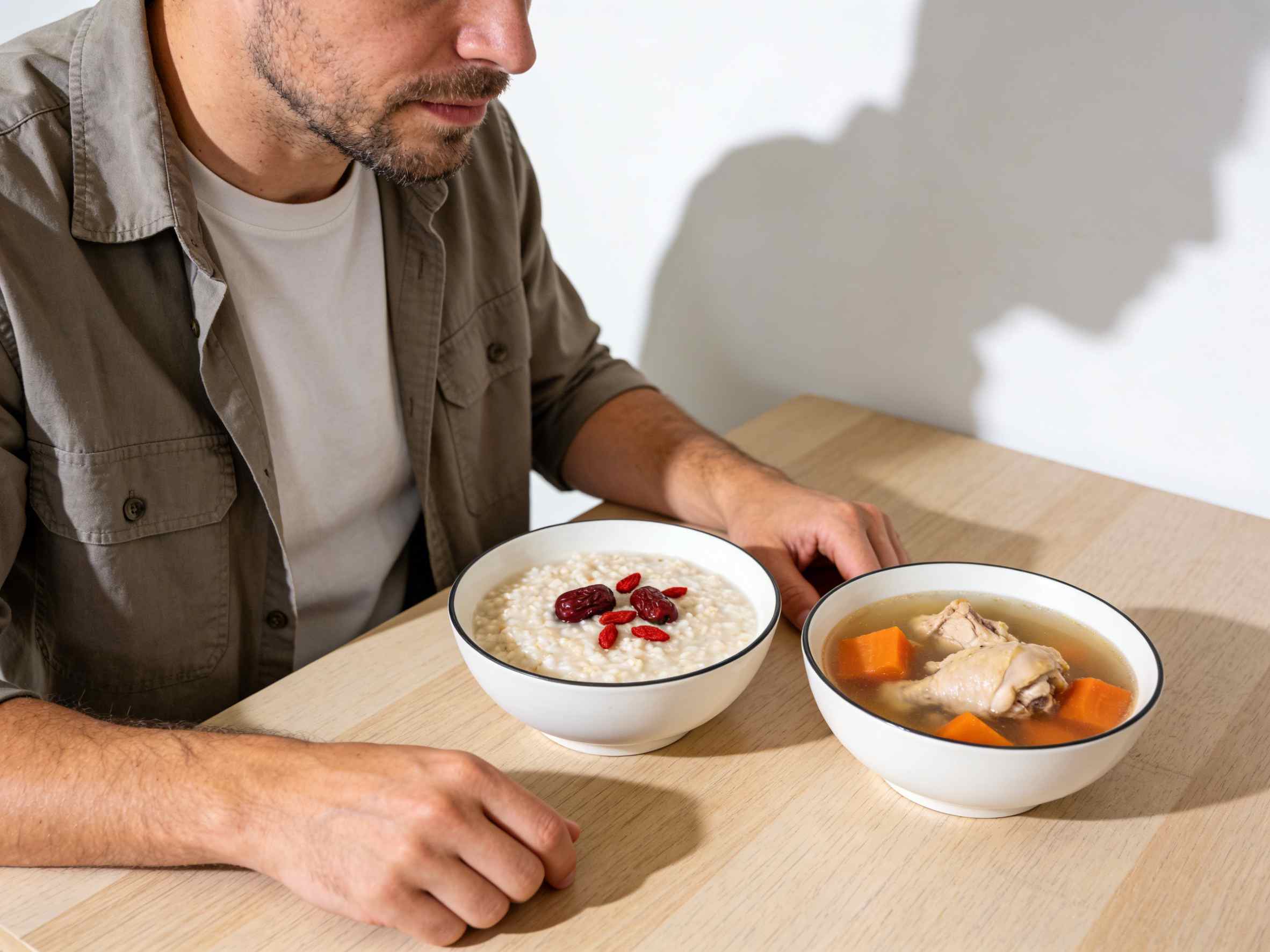
Men's Health: Three Nourishing Medicinal Dishes - Preparation and Nutritional Benefits
This article introduces the ingredients, functions, and preparation methods of scallop and mandarin duck eggs, jade soup, and honey-flavored dishes from a men's health perspective. Scientific men's health knowledge advocates nourishing the body through daily dietary therapy, providing nutritional supplements, replenishing blood, and strengthening the body. This is suitable for those with weak constitutions and helps maintain men's health.
2026-03-24
Men's Health: Three Dietary Therapies to Strengthen the Spleen and Kidneys, Including Chestnut Stew with Cabbage
This article introduces the ingredients and preparation methods of braised cabbage with chestnuts, spleen-strengthening and kidney-tonifying porridge, and vinegar-soaked eggs from a men's health perspective. Scientific men's health knowledge advocates nourishing the body through daily dietary therapy, strengthening the spleen and stomach, replenishing essence and marrow, suitable for those with weak constitutions and fatigue, and helping to maintain men's health.
2026-04-23