
Stress Reduction and Brain Health for Men: Five Effective Ways to Relieve Tension and a Hygiene Guide for Middle-Aged Mental Workers
Buying groceries and cooking on holidays, repeatedly doing a task requiring high concentration, or rushing to complete a task within a limited time... all these things can cause tension, leading to fatigue and discomfort. Here are five painless and side-effect-free ways to relieve tension; you might want to give them a try.
1. Laughter. Regardless of the method, whether it's watching a comedy or listening to jokes... William Fry (a psychiatrist) of Stanford Medical School says, “Laughter stimulates your heart, back, and limbs, leading to natural relaxation, which is very beneficial for restoring blood pressure and heart rate to normal.” Sometimes, men are in a state of extreme tension and find it difficult to laugh; in such cases, they can use some self-stimulation methods. Aaron Erkin, who hosts “Anti-Tension Workshops,” introduces an “exaggeration method”-exaggerating the situation to an unreasonable proportion-for example, when you are driving or cycling in a traffic jam and unable to escape, imagine a scene from a movie, imagining all the roads are blocked and people will rescue you by helicopter. Since tension often stems from your environment, when you exaggerate the environment to an absurd degree, this kind of imagination is a wonderful natural tranquilizer.
Second, talk it out. Are you nervous about year-end accounting? Are you worried about meeting your future in-laws? Talk about it, let some family or close friends share your tension or worry. Once the tension jumps out of your heart and out into your mouth, it naturally lessens by half. After people (especially those who have had similar experiences or are currently facing similar situations) help you analyze and clarify, the other half will often disappear. If that still doesn't work, try writing it down! And then put it aside! For example, if you're nervous and worried and can't sleep at 3 a.m., just get up and write down your worries on a piece of paper, noting that you will start working on solving them at 9:30 a.m.; in this way, you've actually "dispersed" the tension, making it easier to feel less nervous.
3. Take a warm bath. A water temperature of 100-120 degrees Fahrenheit is most relaxing. Carol B. Lewis, an associate professor of medicine at the University of Washington, says, "This method can improve blood circulation and promote muscle relaxation." He says that recent tests show this method can even induce some beneficial biochemical changes and achieve good results such as deeper sleep. He further explains, "It can be combined with certain forms of auxiliary movements. For example, first, completely relax your hands, letting them float lightly on the water; prepare to imagine that the 'relaxation' has moved to your elbows, then through your shoulders and neck to your head; then further use this awareness to direct this 'relaxation' to specific parts of the body, especially to tense areas. In this way, you can achieve a natural calming effect. Simply put, it's like 'soaking' away tension with warm water."
IV. Deep Breathing. When you are anxious or nervous, your breathing becomes shallow and your heart rate increases. However, you can calm yourself down with a few slow, deep breaths, and it almost always works immediately. The technique is extremely simple. First, slowly inhale through your nose into your abdomen, then exhale even more slowly, while gently saying or silently repeating the words "relax, relax, relax" or "go, go, go." Jeffrey A. Miguel, author of *Deep Breathing*, says, "Practice this for one or two minutes, at most ten minutes, regularly. Once you master this technique, you can use it freely in an emergency."
5. Taking a walk. More than 30 years ago, some men recognized that walking can sometimes be more effective than the best tranquilizers. Robert Tyler, a psychology professor at the University of California and author of *Biopsychology*, conducted an experiment: he had two groups of 18 people each eat a lot of candy, then had one group sit while the other walked; he asked both groups how they felt after 30, 60, and 120 minutes. The results were clear: the group that walked felt much more relaxed. Professor Sarah Slodgrass, a social psychologist at Florida Atlantic University, also conducted an experiment: she divided 79 students into three groups and had them walk in different ways; the first group walked with a normal posture; the second group took larger strides and swung their arms; the third group walked with their eyes down. The second group showed the best results because the free arm swing relaxed their shoulders, neck, and back.
As we all know, most middle-aged men are in their prime, energetic, quick-witted, meticulous in their thinking, and highly efficient at work. However, some men often feel mentally foggy, listless, and experience memory decline. There are many reasons for this, the most important being improper use of the brain or insufficient protection of the brain. The brain is one of the most important organs in the human body. Although it weighs less than 1.5 kilograms, its function is astonishing. The brain contains 14 billion brain cells, which are highly differentiated and have complex functions, controlling and regulating various physiological activities of the body. Therefore, the brain is called the body's "command center." It is conceivable that if brain function is impaired, it will inevitably affect the physiological activities of the whole body and may even lead to various pathological conditions.
How should middle-aged men use their brains reasonably and protect them? Avoid overworking your brain. Because brain cells work a heavy workload, fatigue is common. When we engage in mental activity, brain cells are in a state of high excitement. Studies have shown that after two or three hours of continuous mental work, brain cells become over-excited and then inhibited, leading to dizziness, sluggish thinking, and low work efficiency. If brain cells are chronically fatigued, the excitation and inhibition processes become uncoordinated, affecting brain function and causing symptoms such as dizziness, insomnia, palpitations, and indigestion, and even developing into neurasthenia and neurosis. Currently, middle-aged men shoulder heavy responsibilities in various industries. Middle-aged intellectuals, in particular, bear heavy workloads and are prone to overworking their brains. Therefore, it is essential to pay attention to the balance between work and rest and ensure adequate sleep. After working continuously for two or three hours, take a short break, preferably going outdoors for a walk and some physical activity-as the saying goes, "change your mind." Experience shows that short periods of activity can activate inhibited brain cells, quickly restore energy, and improve work efficiency. Adequate nutrition is also crucial. Because brain cells are highly active, they require ample oxygen and nutrients. Nutritional levels and brain function are closely related. Middle-aged men, who spend a lot of time using their brains, must eat more protein-rich foods, such as meat, eggs, and soy products, to maintain normal brain cell function.

Key points for selecting over-the-counter drugs and safe medication usage guidelines
This article details the key points for purchasing over-the-counter (OTC) drugs, including identifying them clearly, reading instructions, and using them accurately. It also reminds readers to be aware of potential side effects and to seek medical attention promptly. Mastering scientific knowledge about OTC drug use is an important foundation for ensuring safe medication use at home.
2026-03-24
Men's Health: The therapeutic effects of stir-fried scallops with eggs and spinach with pork liver
This article introduces the ingredients and preparation methods of two dishes from a men's health perspective: stir-fried scallops with eggs and stir-fried spinach with pork liver. Scientific men's health knowledge advocates nourishing the body through daily dietary therapy. Stir-fried scallops with eggs nourishes yin and replenishes blood, while spinach and pork liver nourish the liver and improve eyesight, thus contributing to men's health maintenance.
2026-03-24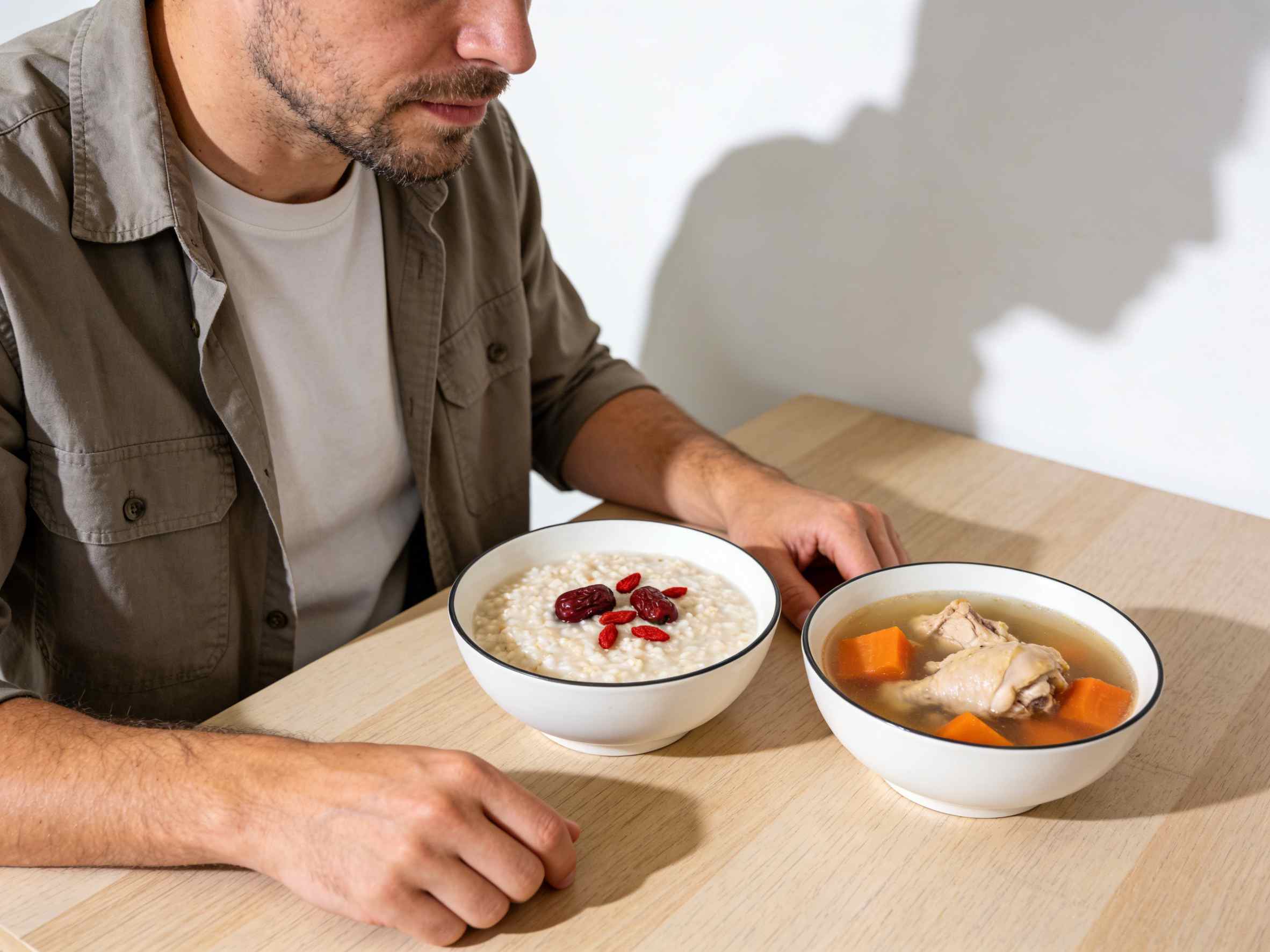
Men's Health: Three Nourishing Medicinal Dishes - Preparation and Nutritional Benefits
This article introduces the ingredients, functions, and preparation methods of scallop and mandarin duck eggs, jade soup, and honey-flavored dishes from a men's health perspective. Scientific men's health knowledge advocates nourishing the body through daily dietary therapy, providing nutritional supplements, replenishing blood, and strengthening the body. This is suitable for those with weak constitutions and helps maintain men's health.
2026-03-24