
Workplace weight loss exercises for middle-aged men, exercise during spare time, and the essence of Tai Chi for health preservation
122. How can middle-aged men do weight loss exercises in the office? Sitting in the office for too long can lead to obesity, which not only affects appearance but is also detrimental to health. A 15-minute office weight loss exercise is convenient, practical, and easy to perform. If you can persist in it for a long time, it will be very effective for weight loss and strengthening the body. (1) Arm bending exercise: Put something with a certain weight, such as a phone book, into your handbag. Then, hold the handle of the bag and repeatedly lift it from your waist to your shoulder. Alternate between your left and right arms and do 30 repetitions on each side. (2) Push-up exercise: Place your hands flat on two chairs about a fist's distance from your shoulders. Keep your body as straight as possible and then do push-ups. This exercise can strengthen the triceps of the upper arm. The preparation posture before the exercise is the same as the push-up exercise, except that to increase the intensity of the exercise, you should put your feet on the table. Straighten your legs and slowly do push-ups. This can stimulate the muscle groups on the outside of your arms and gradually make them more resilient. (3) Squatting exercise: Stand with your feet shoulder-width apart, toes slightly outward, knees slightly bent, and hands clasped behind your head. Slowly squat down until your thighs are parallel to the ground, then slowly return to the starting position, being careful not to straighten your knees. (4) Knee bending exercise: With your buttocks slightly touching the chair, grip the edge of the chair with both hands, bend your knees easily, and bring your legs together. Then slowly bring your knees towards your chest, and then slowly return to the starting position. (5) Side bending exercise: Hold a handbag of appropriate weight in both hands, with one palm placed behind your head. Let the handbag hang down naturally as if being pulled towards the ground, and bend your body to the side. To return to the starting position, slowly lift the handbag back up, and slowly straighten your body. Alternate between the left and right sides. (6) Backbend exercise: Stand with your feet shoulder-width apart, hold onto a chair with one hand, keeping your upper body fixed. Then push your knees forward and lean your waist backward, holding this position until you feel fatigued. This exercise can strengthen the muscles on the front of your thighs and burn fat in your buttocks.
How can middle-aged men squeeze in time for physical exercise? Middle-aged men can try the following methods to make time for physical exercise amidst their busy work, study, and daily life: (1) If you go to the market to buy groceries, try running there and back. This saves time and provides exercise. (2) If your commute to work is short, within three bus stops, avoid taking the bus and try a brisk walk or jog. (3) If you can reach your workplace by bicycle in half an hour, it's best to ride a bicycle instead of a car. This is a rare opportunity for exercise. (4) If your office is on the 10th floor or less, don't take the elevator. Insist on climbing the stairs. Although you may be out of breath, it will greatly exercise your lower limbs and respiratory system. (5) Office workers should not force themselves to continue working at 10 am and 4 pm. Stop and stretch your muscles and do 10 minutes of simple office exercises. This will clear your mind and improve your mood. (6) When you are in a long line at the ticket window or waiting for the train on the platform, do not stand still or sit still. Do not be shy. You should boldly stomp your feet in place or do 10 high knee exercises. Even just stretching a few times is a great way to exercise. Don’t miss it.
What are some ways to take a walk? Walking is a full-body exercise that can work the limbs, waist, and bones. It can also strengthen the heart, lower blood pressure, prevent coronary heart disease, and improve lung function. Specifically, there are several types of walking: (1) Regular walking: 60-90 steps per minute, 20-40 minutes each time. This method is suitable for patients with coronary heart disease, hypertension, sequelae of cerebral hemorrhage, or respiratory diseases. (2) Brisk walking: 90-190 steps per minute, 30-60 minutes each time. This method helps with joint and gastrointestinal activity, eliminates fatigue, and invigorates the spirit. (3) Walking on flat ground and slopes: walking alternately on flat ground and slopes. After walking on different slopes, walk on flat ground for 10 minutes. Be careful not to walk on too steep slopes and pay attention to safety. (4) Arm-swinging walking: swinging your arms in large amplitude while walking can exercise your shoulders and chest. (5) Abdominal massage walking: massaging your abdomen with both hands while walking. This method is beneficial for people with poor digestion and indigestion. Be careful not to apply too much pressure during the massage, and don't walk too fast; a pace of 30-60 steps per minute is ideal. The massage can be performed alternately in clockwise and counter-clockwise directions, each session lasting 3-5 minutes. Middle-aged men should maintain good posture and keep their heads up while walking, appearing energetic. After returning home from a walk each day, soak your feet in hot water to relieve foot fatigue. Before bed, massage your legs and feet to promote blood circulation. While at your desk, periodically straighten your legs and perform toe-pointing and toe-flexing exercises to achieve a similar fitness goal.
Why is it necessary to do warm-up exercises before practicing Tai Chi? There's no doubt that warm-up exercises are essential before any exercise. However, some people believe that because Tai Chi movements are slow and not strenuous, there's generally no risk of injury. This is not the case. Warming up before practicing Tai Chi involves not only physical activity but also mental preparation through concentration and stillness. This physical preparation differs slightly from other exercise preparations. It may include: ① Taking a short walk. ② Performing a few simple joint and trunk exercises. ③ Practicing the basic Tai Chi form, including stance training, and coordinating with several deep breaths. ④ Practicing single Tai Chi postures. The entire activity should last 5-10 minutes. For mental preparation, first, before starting the postures, close your eyes slightly or gaze into the distance for 1-2 minutes to calm your mind. Then, consciously relax all joints and muscles from top to bottom. Only after achieving a calm and peaceful state of mind should you begin the postures.
Why is relaxation important in Tai Chi practice? Tai Chi emphasizes relaxation in two aspects: physical relaxation and mental relaxation. This relaxation should be understood as comfort and naturalness. Physical relaxation doesn't mean muscle loosening, but rather relaxation based on physiological tension while maintaining a normal standing posture. If you relax to the point where you can't lift your head, this relaxation is equivalent to the relaxation of sleeping. Mental relaxation is not mental slackness, but rather a moderate level of tension. Areas that should be relaxed should not be tense. Relaxation allows for coordinated, calm, and natural movements. Beginners often find these requirements difficult to understand, easily resorting to brute force and stiffness, causing unnecessary excessive tension in certain areas. With deeper practice and an understanding of the principles and methods of tension and relaxation, unnecessary tension and stiffness can be eliminated. Although difficult for beginners, they must start with relaxation and gentleness-a general principle in Tai Chi practice.
Why is continuous flow essential in Tai Chi practice? A key characteristic of Tai Chi is its continuous flow and complete power. Continuous flow means treating the entire routine, from the beginning to the end, as an inseparable whole. Regardless of the subtle shifts in posture or transitions, the movements must be seamlessly connected; the end of one movement is the beginning of the next, with no noticeable pauses. This is what is meant by "flowing like clouds and water, continuous and uninterrupted." Complete power refers to the balance of softness and hardness, evenness and continuity, with power flowing continuously throughout the entire movement. Discontinuity in power refers to interruptions, pauses, breaks, or abrupt changes in force. Continuous movement and continuous power are equally important. Tai Chi's power originates from the waist and legs, extends to the arms, and reaches the fingertips, with the waist as the pivot, ensuring a unified and continuous flow throughout the body. Beginners often focus on upper limb movements, isolating their hands and legs, resulting in slow, disjointed movements that appear chaotic, scattered, and lacking in power. This is something that must be overcome.
Why should the eyes follow the hands in Tai Chi practice? Various schools of Tai Chi emphasize the principle of "eyes following hands, steps following body movements," making hands, eyes, body, and steps the four essential elements of all martial arts. From a modern physiological perspective, eye training is also a component of physical training. The relaxation and contraction of eye muscles accelerates blood circulation in the eyes, improves eye nutrition, and enhances eye function. Emphasizing focused gaze during practice also helps with mental concentration and mental stability. The principles of eye movement in Tai Chi are: ① Typically, in each movement, one hand attacks while the other defends. The eyes should follow the attacking hand, i.e., the hand in front. ② In stationary postures, the gaze follows the tip of the index or middle finger forward. ③ Simultaneously with the attacking gesture, one should also look up, down, left, and right, avoiding a fixed or squinting gaze; the gaze should be flexible and bright.
What are the physiological benefits of practicing Tai Chi? Tai Chi is a gentle, full-body exercise that trains the body, breath, and mind, improving the function of various systems and promoting health. (1) Cardiovascular system: When practicing Tai Chi, muscles are naturally relaxed, blood vessels are more open, the heart does less work, and blood pressure drops. Practicing Tai Chi is beneficial for preventing and treating various cardiovascular diseases, especially coronary artery disease. It can strengthen blood and lymph circulation and eliminate blood stasis. (2) Respiratory system: Tai Chi breathing is fine, slow, deep, and long, which can train the diaphragm, maintain lung tissue elasticity, and increase lung capacity. Long-term Tai Chi practice involves up-and-down movement of the body, even blood flow in the lungs, which reduces the physiological dead space of breathing and increases the respiratory effect. Therefore, Tai Chi is a good rehabilitation exercise for patients with chronic pulmonary insufficiency and those recovering from tuberculosis. (3) Musculoskeletal system: Tai Chi emphasizes the coordination of the whole body. Regular Tai Chi practice has a good effect on the shape and structure of the spine and the health of the musculoskeletal system. It also has a good rehabilitation effect for patients with chronic rheumatoid arthritis. (4) Nervous system: Tai Chi practice is a dual practice of internal and external cultivation, which greatly promotes the regulation and control of the central nervous system over all nerves and organs of the human body. At the same time, Tai Chi exercise can provide the tired brain with sufficient oxygen and allow it to rest, regulate and develop, making it the preferred exercise for mental workers. (5) Metabolism: Tai Chi has a good effect on the metabolism of lipids, proteins, and inorganic salts such as calcium and phosphorus. After 5 to 6 months of exercise, the protein content in the blood increases significantly, while the content of globulin and cholesterol decreases significantly, and the symptoms of arteriosclerosis are also greatly reduced.
Why can't physical labor replace exercise? Some people believe that manual laborers don't need to engage in physical activity, which is clearly unscientific. While labor can provide some exercise, it cannot replace physical activity. This is because labor cannot provide comprehensive physical activity. Whether in industrial or agricultural labor, especially industrial labor, with the increasing specialization of labor, workers in different jobs repeat monotonous movements every day, only activating certain local muscles, leading to localized muscle fatigue, while other muscle groups remain relatively still or at rest. Therefore, this type of exercise is one-sided and unbalanced. For example, in some jobs that require standing, the muscles in the lower limbs and lower back are under constant tension, which over time can easily lead to chronic occupational diseases or physical deformities such as lumbar muscle strain, varicose veins in the lower limbs, and arthritis. Labor can only increase blood supply to local tissues and improve their nutrition, but it cannot improve overall blood circulation. Physical exercise provides comprehensive training, improving the function of muscles, joints, and organs such as the circulatory, digestive, and respiratory systems. It also relaxes muscles in the areas subjected to physical labor, allowing them to rest and thus accelerating the elimination of localized fatigue caused by work. Physical exercise can also help prevent and treat certain chronic diseases. As mentioned above, manual labor not only lacks therapeutic benefits but also offers little preventative effect; in fact, it may even lead to certain occupational diseases.
Why should we persist in physical exercise? Those who have benefited from exercise have all strictly adhered to the physiological laws of human activity. The functions of the body's various organ systems cannot be improved through a single exercise or activity; it is a gradual process of development, improvement, long-term accumulation, and qualitative change from quantitative change. Rushing into physical exercise not only fails to achieve the desired results but can also harm health. As people reach middle age, their metabolic activity gradually weakens, and the ability of various organ systems to cope with sudden stimuli decreases; therefore, gradual progression is crucial. Thus, fitness exercises must begin small and gradually increase in intensity, prioritizing slow movements. Start with short walks or jogging, gradually increasing the time, distance, and intensity. If adverse reactions occur, the cause should be identified and corrected as soon as possible. For the human body, only through frequent and repeated stimulation can subtle changes occur, achieving the goal of improved health. In daily life, some people exercise only occasionally for a few days, then rest for a few days, or use work or housework as an excuse-a "three days fishing, two days drying nets" approach. The reason lies in the fact that these people haven't truly grasped the significance of exercise and fitness, and are unaware of its scientific principles. This is especially true for middle-aged people. When your temples begin to gray, if you've maintained an exercise habit since your youth, don't change it. Once you stop exercising under the pretext of old age, even the abilities and qualities acquired in your youth will gradually decline, and may even decline more rapidly, turning a once strong body into one prone to illness. It's not too late for middle-aged people to realize the value of good health. You must be determined and have the belief that "I exercise, I am healthy" to have the motivation and self-discipline.
How to treat oral inflammation with exercise therapy? This therapy is suitable for those without purulent oral inflammation. Specific method: Clench or tap your upper and lower teeth together forcefully, several times consecutively; massage your gums on both cheeks and lips with your palms until you feel a warming sensation. Perform the above exercises three times daily, 5-10 minutes each time. Be careful not to use excessive force during the exercises, especially if you have cavities or significantly loose teeth; ensure the force is steady.
How to prevent and treat lower back pain with exercise therapy? (1) Standing position: Stand with feet shoulder-width apart and rotate your body to the left and right 9 times each; bend your body to the left and right, and when bending to the left, extend your left hand as far down as possible and bend your right elbow. When bending to the right, extend your right hand as far down as possible and bend your left elbow. Practice 9 times each; Standing position: Within the range of pain tolerance, do forward bending and backward bending exercises. When bending forward, straighten your knees, lower your head, and extend your hands as far down as possible. When bending backward, raise your head. Do 9 times each. (2) Hanging stretch: Climb a horizontal bar at a high place with your hands, and lift your feet slightly off the ground. Stretch for about 1 minute each time, and do it twice a day. (3) Walking backward: Stand tall with your head up and chest out, look straight ahead, and let your arms hang naturally. When walking backward, swing your arms naturally. Take 9 steps forward and 9 steps backward, repeat, and gradually increase the number of backward walking steps to 100-200, 1-2 times a day. Pay attention to safety. (4) Prone position: Turn your head to one side, clasp your hands behind your back, use your abdomen as a fulcrum, and lift your head, chest and both lower limbs, keeping your knees straight. Hold each lift for more than 5 seconds, do 9 repetitions as one set, rest for two minutes, and then do another set. In addition, patients with lower back pain should sleep on a hard bed, avoid bending over to lift heavy objects, and avoid getting cold or overworking.
How to prevent and treat prostatitis with exercise therapy? (1) Jogging or brisk walking: Middle-aged men can jog or brisk walk for 20-30 minutes every day, which can help maintain prostate health. (2) Self-massage: Massage the perineum 100 times every morning and evening, lift the anus and inhale 100 times, focus the mind on the dantian and guide the qi to the perineum, contract the perineum more than 10 times, and feel warmth in the perineum. Generally speaking, the symptoms will improve after one month of massage. (3) Do not sit still for long periods of time: Sitting still for long periods of time is not conducive to the prevention and treatment of prostatitis.
How to treat kidney deficiency with exercise therapy? (1) Tai Chi: Tai Chi is a slow exercise with the waist as the pivot. It is best to do it in the morning in a place with fresh air. (2) Drumming the Heavenly Drum: Press your palms tightly against your ears, press your ten fingers against the back of your head, and then rhythmically tap the depression of the occipital bone with the tip of your index finger. Tap each side 50 times each time, once in the morning and once in the evening. It has a certain effect on dizziness, tinnitus, forgetfulness, and decreased thinking ability. (3) Massage the waist: Rub your palms together until they are warm, then place them on both sides of your waist, palms facing the skin, and massage up and down until you feel warmth. Do this once in the morning and once in the evening, about 200 times each time. (4) Massage the soles of the feet: Rub your palms together until they are warm, then rub the sole of your right foot with your left hand and the sole of your left foot with your right hand. Do this once in the morning and once in the evening, 300 times each time. (5) Replenishing kidney essence: Sit cross-legged and focus your mind on the dantian. Swallow saliva once every half minute. This can replenish kidney essence. (6) Anal contraction: Relax your whole body and breathe naturally. When exhaling, perform anal contraction, and when inhaling, relax. Repeat about 30 times. This method can promote blood circulation around the pelvic cavity, promote the recovery of sexual organs, and has a good effect on preventing and treating impotence and premature ejaculation caused by kidney deficiency.
Can patients with kidney disease and erectile dysfunction engage in physical activity? Due to the special physiological functions of the kidneys, middle-aged men diagnosed with kidney disease are often advised to limit or avoid physical activity. This is because the kidneys are responsible for processing metabolic waste products throughout the body, and exercise can increase their burden. Therefore, during the acute phase, patients are encouraged to rest quietly, minimize activity during the recovery period, and avoid heavy physical labor after recovery. Does this mean they should absolutely avoid exercise? Some suggest that patients with kidney disease and erectile dysfunction participate in light activities such as walking, arm swinging, or Tai Chi. The main purpose is to relax the mind and relieve psychological stress through appropriate exercise, which is beneficial for both kidney disease and erectile dysfunction.
Is treatment necessary for erectile dysfunction in patients with liver disease? Erectile dysfunction is very common in patients with liver disease. During illness, rest is necessary to promote recovery and restore normal liver function. This period of "sexual hibernation" is also a necessary self-regulation mechanism for the body. For men recovering from or in the later stages of liver disease, sexual activity should resume. If erectile dysfunction occurs, it is often psychogenic. Liver disease itself does not directly cause erectile dysfunction; it only indirectly occurs when liver function is impaired. For these reasons, appropriate exercise is essential for gradually restoring strength and improving overall health.
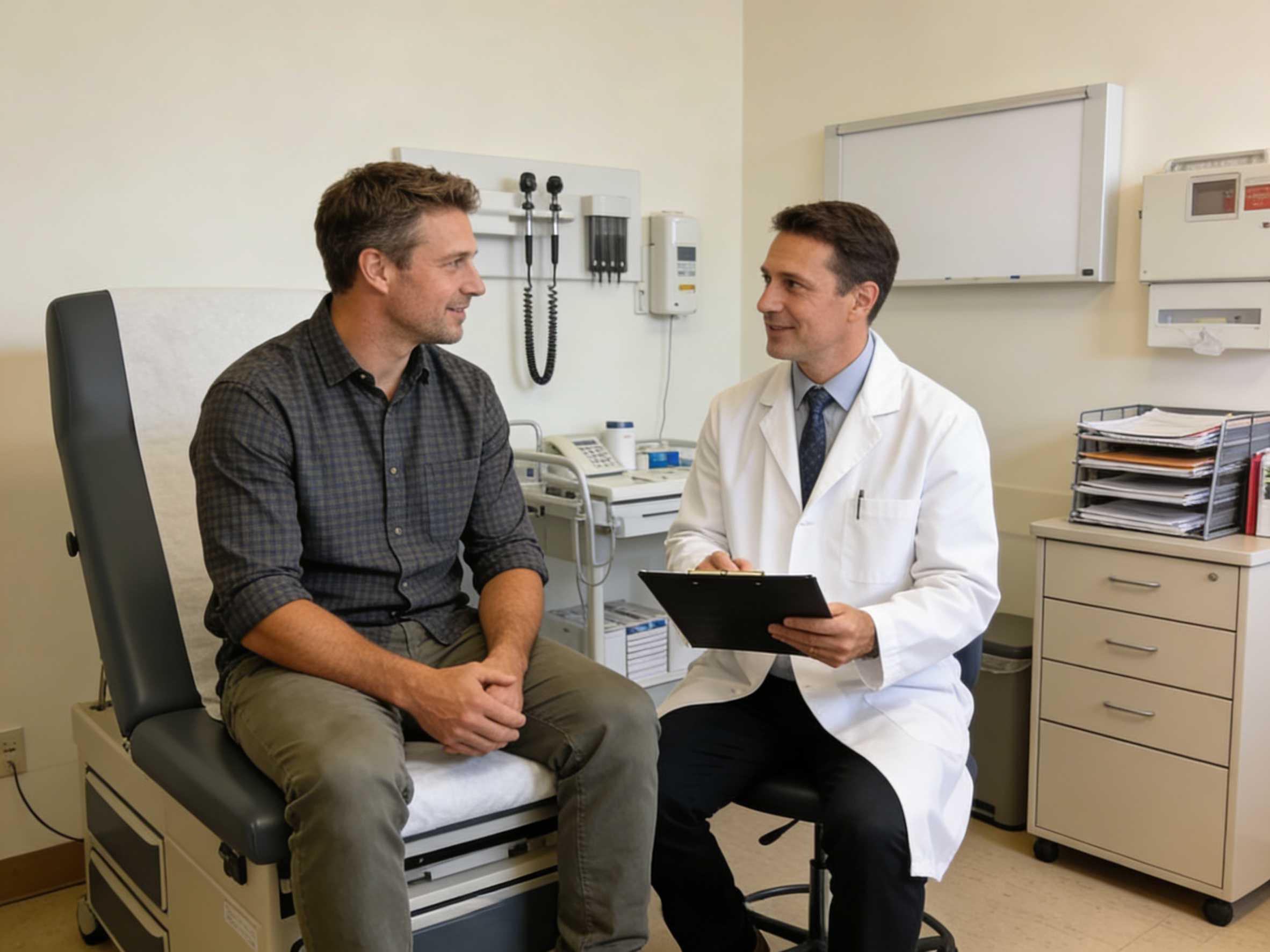
Identify the root causes of problems and distress, and focus on men's health.
This article lists ten psychological problems and behaviors that men should be wary of, and analyzes the common root causes of life's frustrations. Focusing on men's health starts with facing yourself honestly and adjusting your mindset. Scientific men's health knowledge can help you overcome difficulties and embrace a brighter future.
2026-03-24
Men's Health in Psychological Massage Techniques and Analysis of Inferiority Complex
This article introduces psychological massage techniques such as humor and open communication to relieve fatigue, and analyzes the three main roots of men's inferiority complex. Focusing on men's health begins with nurturing one's inner self and facing oneself honestly. Scientific men's health knowledge helps you regain confidence and live a more composed life.
2026-03-24
Relaxation Techniques and Emotional Control: Male Health Wisdom
This article introduces practical relaxation techniques such as napping, visualization, and breathing, and provides guidance on regulating seasonal affective disorder (SAD) through light and diet. Focusing on men's health requires starting with daily stress release and emotional management; scientific men's health knowledge helps you maintain your best condition throughout the year.
2026-03-24